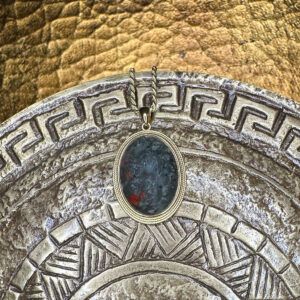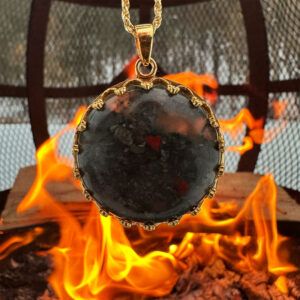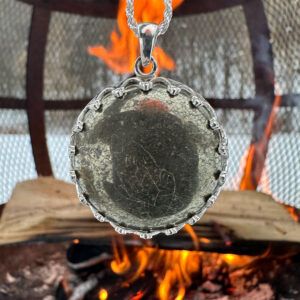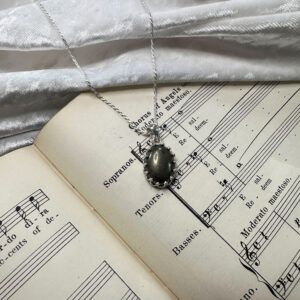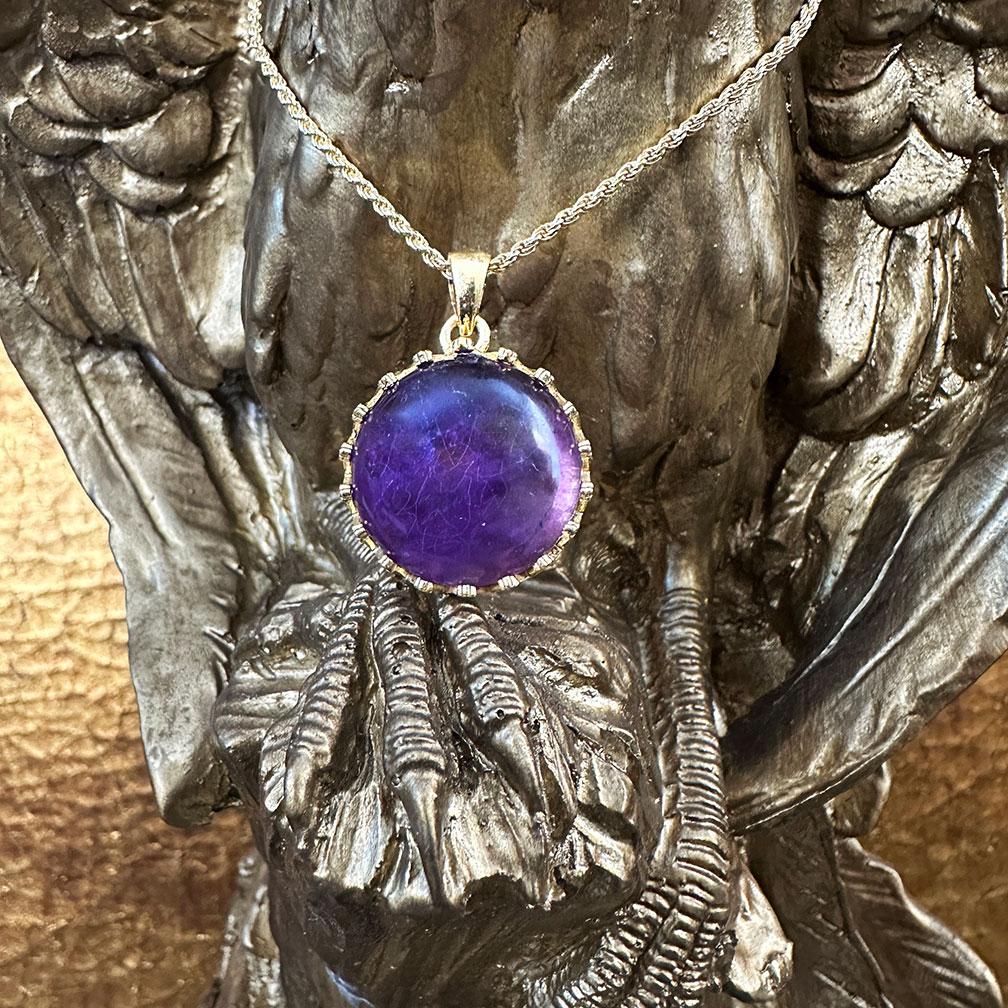
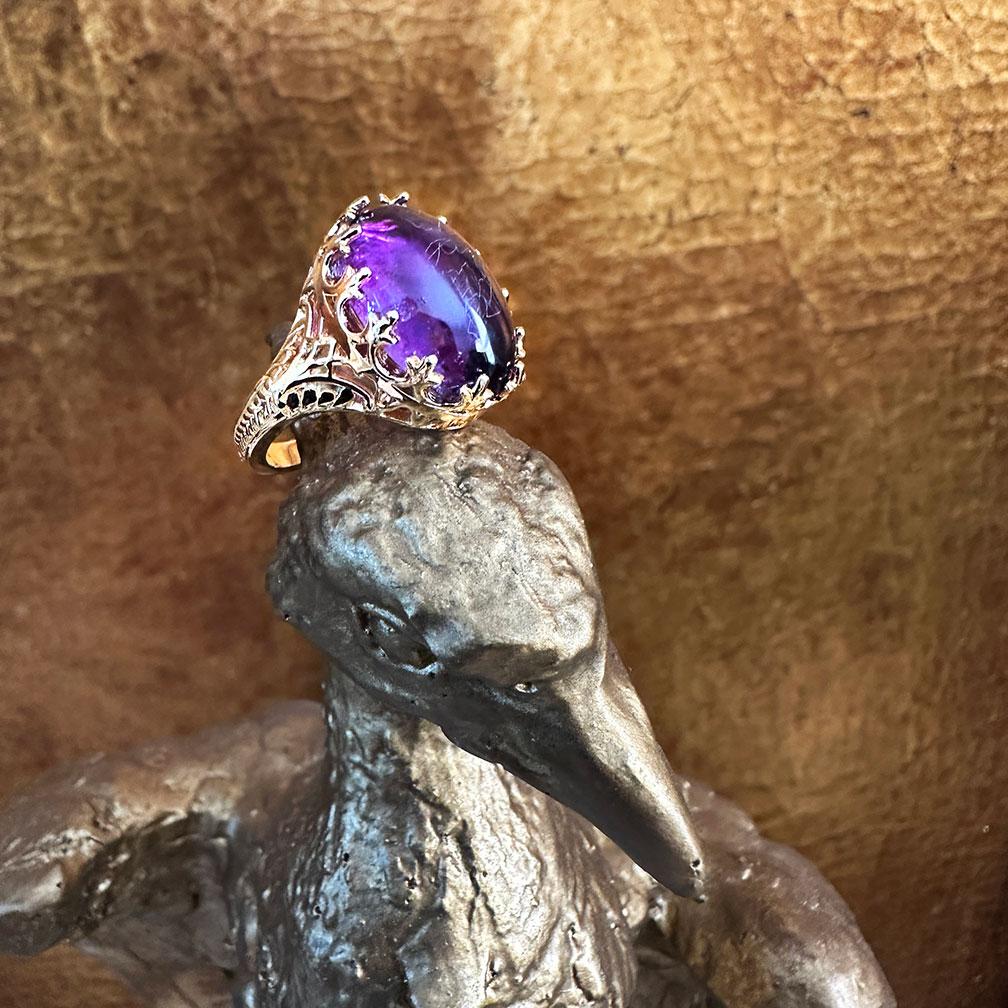
Description
“May God bless you, Jupiter, blessed lord, who is the greater fortune, warm and moist, equitable in all your works, affable, beautiful, wise, truthful, lord of truth and equality, far from all evil, merciful, lover of those who uphold religions and serve them, who thinks little of the things and vices of this world, delighting in religions and religious services, exalted of mind, doer of good and free in your nature, high and honored in your heaven, lawful in your promises and true in the friendships you have.”
—Picatrix, Book III, Chapter 7
The astrological term for one of the highest forms of essential dignity, exaltation, is the translation of a Greek term deriving from the verb ῠ̔ψόω, meaning to raise up or elevate. As one can readily see in the quotation from the celestial petitions above, Jupiter and exaltation go hand in hand. Jupiter, as the greater benefic and one of the three graces, lifts us up, elevates our minds, and draws us away from what is base and unworthy of us.
These Degree of Exaltation Jupiter talismans aim at exaltation in three senses. First, they are literally—as in, by the book—exalted Jupiter talismans, and capture one of the best expressions of Jovial magic. Second, like all Idola Stellarum talismans they were created as expressions of devotion, intended not only as tools for magically achieving worldly ends but also as instruments to help us raise up and elevate our relationships with the sphere of Jupiter and its spirits. Third, through the design and conceptualization of these talismans, we aim to elevate historical texts and practices of astrological magic by dwelling on and elaborating the historical and cultural contexts of these talismans. Let us pursue this third aim in some depth now.
An exalted planet, according to Guido Bonatti, is “like a man who is in his own kingdom, and in his own glory like a kingdom” (Liber Astronomiae, Tr II, ch. 40). Most folks who are into astrology and magically savvy will be familiar with the signs of the planets’ exaltations. Exaltation is also a matter of degree (pun intended): each planet within its sign of exaltation has a point where it is the most exalted, which is referred to as its ‘exaltation degree.’ Many astrological magicians were looking forward to Jupiter in Cancer for the opportunity to make talismans while Jupiter was in the 15th degree of Cancer, its degree of exaltation (that is, between 1400’ and 1459’ Cancer, since the first degree starts at 0 Cancer).
While any Jupiter talisman made while Jupiter occupies his degree of exaltation will receive greater benefits by virtue of occupying this most auspicious position, there is also a specific recipe for a talisman to be made only when Jupiter occupies this degree. The Degree of Exaltation talismans featured in the Graces collection are adapted from this very recipe, which can be found only in certain recensions of the Dhakhīrat Iskandar, known in English as The Treasury of Alexander. The Dhakhīrat is one of the texts collectively known as the pseudo-Aristotelian Hermetica, a series of Arabic texts written in approximately the 9th century AD on talismanic magic, “rituals for attracting the spiritual and planetary forces of the cosmos, the creation of amulets, and extensive astrological rules” (Saif 2021, p. 20). As English-speaking practitioners, we are quite fortunate to have an edition of the Dhakhīrat translated into English, translated by Nicholaj de Mattos Frisvold and edited by Christopher Warnock from Livro do Tesauro de Alexandre, a 1999 Portuguese translation from the Arabic by AM Alfonso-Goldfarb & SAC Jubran.
The pseudo-Aristotelian Hermetica have received little scholarly attention until relatively recently, which is unfortunate because they form a crucial stream of the tradition of astrological magic. Maslama al-Qurtubi states in the Ghayat al-Hakim (the Arabic text that would later be translated into Latin as the Picatrix) that his own book was written by “studying word by word 224 books” (bk. III, ch. 5), including pseudo-Aristotelian Hermetica such as the Kitab al-Ustuwaṭṭās and Kitab al-Isṭimāṭīs, and “gathering the flowers and lilies thereof”—that is, compiling, quoting, reworking, and embellishing material from these books with his own thought and philosophy.
Similar to how many magical texts attribute their contents to ancient sages, appealing to the authority of antiquity, the pseudo-Aristotelian Hermetica purport to record wisdom taught by Aristotle (the preeminent philosopher who by that point had achieved mythical status to intellectuals in the Abbasid Caliphate) to Alexander the Great. Their actual historical origin is somewhat murky; some sources, including Picatrix, attribute them to the Sabians, a contested term akin to the general term ‘Pagan.’ For complex historical reasons that are still a matter of ongoing debate in the scholarly literature, this magical knowledge has been attributed to a specific people, the Sabians of Harran, a city in present-day Türkiye that was one of the last bastions of Mesopotamian astral religion. Whatever the specific origins of these texts, they serve as an important bridge and part of the story of how ancient amuletic magic developed into the technically complex and powerful talismanic magic that reached its zenith during the Islamic Golden Age.
Now, regarding the talismans, the recipe in Dhakhīrat Iskandar is as follows:
“Make this ring when Jupiter reaches the fifteenth degree of Cancer with the Moon in Cancer making a [favorable] aspect. When this configuration is reached make a ring of one ounce of tin with a square signet. Inscribe on the signet the image of a man riding a lion and with a sword in his right hand and a bow in his left hand.”
—Book of the Treasure of Alexander, from RenaissanceAstrology.com
To the best of our current knowledge, although many of our fellow mages made talismans while Jupiter occupied this degree, we have not heard of anyone else using this exact talismanic image of a man riding a lion with a sword in his right hand and a bow in his left hand. Our choice of this image is a reflection of our attempts to respectfully engage with the tradition with fidelity and transparency.
That said, our version of these Degree of Exaltation talismans made two adaptations. First, as many contemporary practitioners do with talismanic recipes, we substituted materials: as we work with gemstones and not metal, we used amethyst rather than tin. See notes on materials further down this page for a further discussion of that choice. Second, the limitation that the Moon also be in Cancer in aspect to Jupiter would render degree of exaltation talismans far, far more rare than they already are (note: we suspect a translation or textual transmission issue here, as the Moon in Cancer can only apply to conjoin Jupiter and cannot ‘make a favorable aspect,’ a phrase which would have meant a sextile or trine), and so we used an election in which the Moon in Taurus applied by sextile to Jupiter. You can read more about the election details below.
The Dhakhīrat Iskandar states that these talismans are for “the strengthening of the heart and the alleviation of heart pains [and] fainting,” as well as for the bearer to “be popular, well respected and praised. [They] will be victorious in [their] disputes and [their] endeavors will be fruitful.” Although neither of us have heart issues that would allow us to offer a true test of these talismans’ suggested health benefits, we have found them to be excellent sources of jovial virtues and boons, including praise, victory, and fruitfulness.
[Note: Although the configuration of Jupiter in his degree of exaltation is quite rare—occurring about once every twelve years—and the existence of suitable talismanic elections in that configuration rarer still, we want to assuage concerns about scarcity and accessibility. If you are not in a position right now, financially or otherwise, to acquire one of these Jupiter talismans, rest assured that this was not Idola Stellarum’s only Jupiter in Cancer talismanic operation, and there will be ample opportunities in the future if now is not the time. We also want to recognize that precipitously rising precious metal prices over the past year or so have led us to slightly increase the prices of our talismans.]
Technical Details
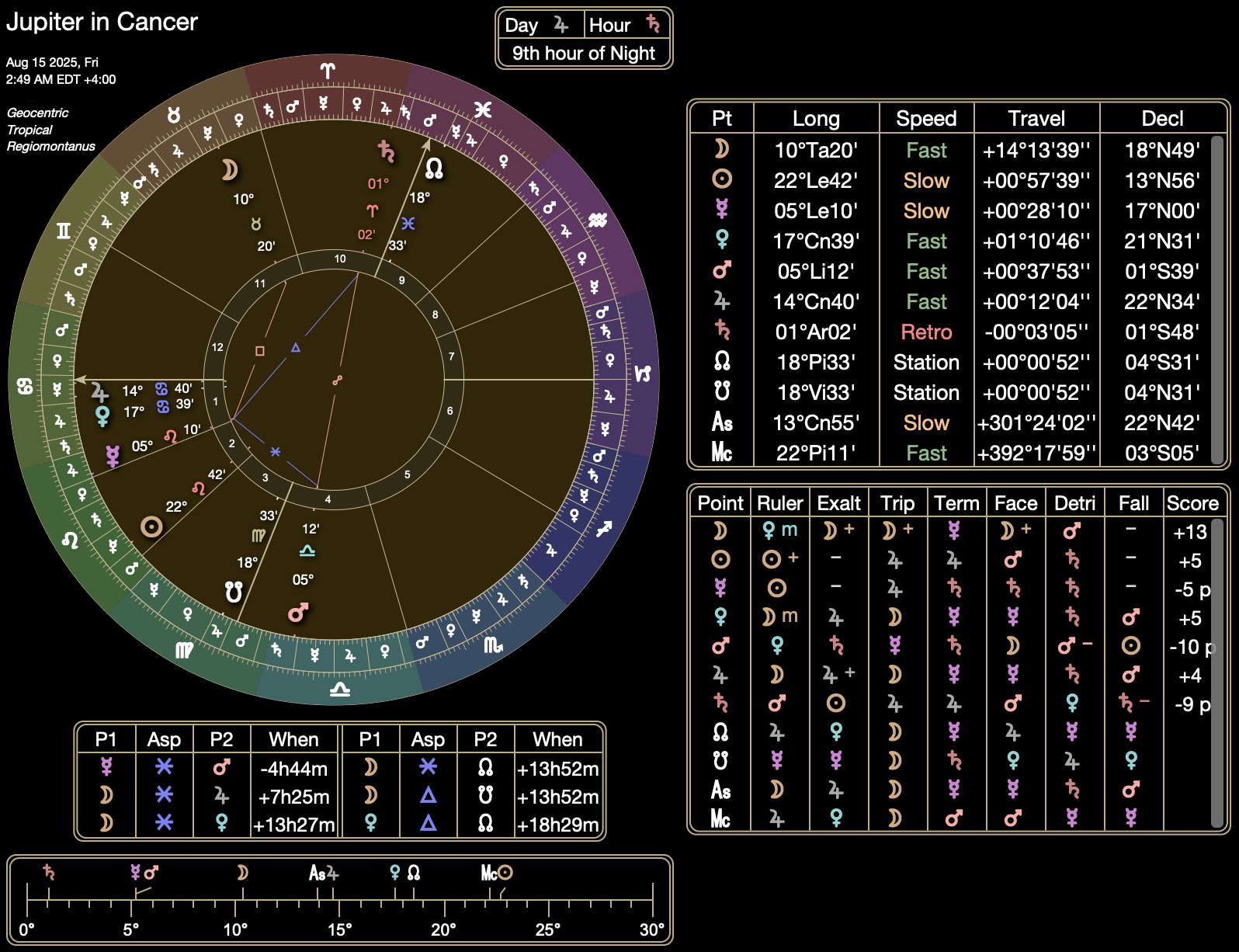
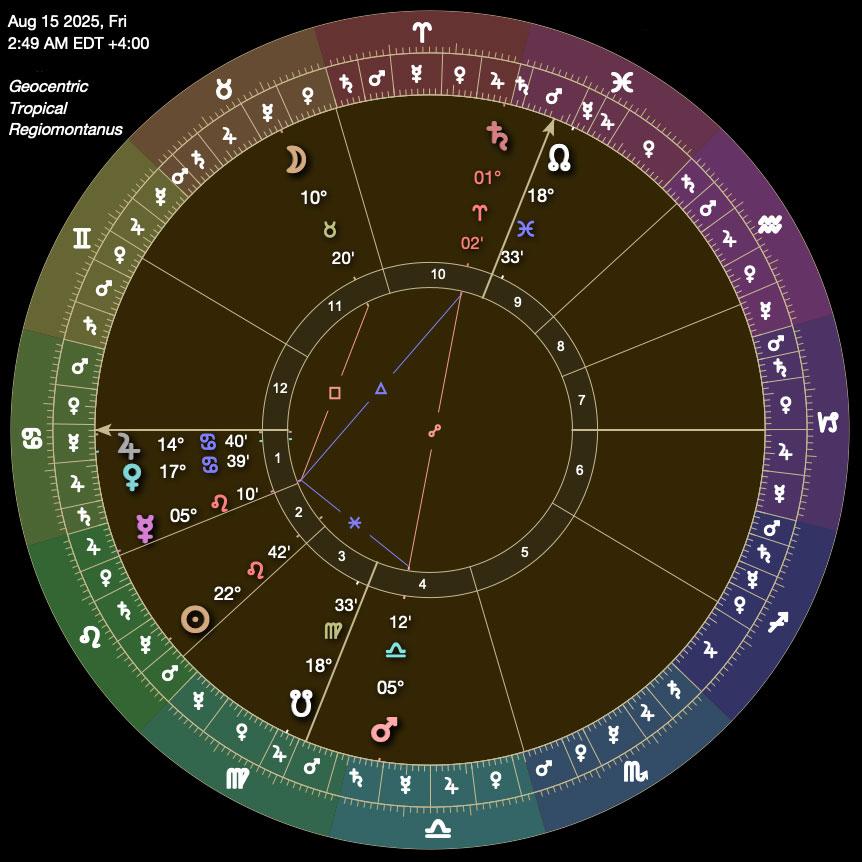
These Jupiter in Cancer Degree of Exaltation talismans were created in the early morning of Friday, August 15, 2025 between 2:29am and 3:03am EDT.
Essential Features of the Election
For planetary astrological talisman elections, we always require that the relevant planet either rises on the Ascendant or culminates on the Midheaven. We almost always require that to happen during the relevant planetary hour. However, we have been aware that several contemporary astrologicial magicians also consider it acceptable to craft talismans during the relevant planetary day but not hour. Although in general we consider planetary hour to be a stronger factor, for a configuration as rare as Jupiter in his degree of exaltation, we decided to experiment with electing talismans during Jupiter day only—not Jupiter hour—to maximize the accessibility of talismans of this configuration.
This election featured a dignified Jupiter in his sign of exaltation, Cancer, rising on the Ascendant. The working took place while Jupiter was within 5° of the AC, ending before Saturn was within 5° of the MC. Most notably, Jupiter was also in his degree of exaltation, in the 15th degree of Cancer (i.e., between 14°00′ and 14°59′) at 14°40′ Cancer.
Planetary talisman elections also require the Moon to be in sufficiently good condition. In this election, the Moon moving with fast speed and good light was in Taurus, dignified by exaltation, triplicity, and face. Luna was also applying to a sextile with Jupiter within less than 4°, and her next aspect after that would be a sextile to her ruler, Venus.
Since the 1st house signifies the bearer of the talisman, we also look at the condition of the Lord of the Ascendant in planetary elections. Since the Moon rules Cancer, the rising sign, the same considerations apply as in the above paragraph.
Further Magical Factors of the Election
Three factors significantly enhance the magical qualities of this election.
First, as mentioned, Jupiter was in his degree of exaltation. Each planet is exalted within a particular sign, and additionally, each planet has a particular degree at which they are most exalted. In the case of Jupiter, this is the 15th degree of Cancer (i.e., between 14°00′ and 14°59′). Jupiter was therefore the most powerful he could be in the sign of Cancer. Magically, these degrees are privileged with special talismans from the Book of the Treasure of Alexander to be made only while a planet is in their degree of exaltation.
Second, having a benefic planet on one of the angles or cardines of the chart fortunates a magical election (see Picatrix Book II, Chapter 3). Moreover, having a benefic planet on the Ascendant or Midheaven also serves to mitigate afflictions of the Moon:
“[L]ook for Jupiter or Venus either in the ascendant or in the tenth place, for so they compensate for the debilities of the Moon.”
—Marsilio Ficino, Three Books on Life, Book III, Ch. VI, p. 271 (tr. Kaske & Clark)
In this election, both Jupiter and Venus were in the first house, doubly fortunating the election.
Third, what’s more, two of the angles hosted Behenian fixed stars: Sirius rose on the Ascendant and Vega was setting on the Descendent during this election. Although neither star is of the nature of Jupiter, sources in the Islamicate occult sciences (notably Fakhr al-Dīn al-Rāzī’s al-Sirr al-maktūm) valorize having auspicious fixed stars on angles in magical election charts.
Reflection on Weaknesses of the Election
As noted above, this election is experimental in that we intentionally did not follow our general practice of electing planetary talismans during the relevant planetary hour: this election was performed during Jupiter day (i.e., between sunrise on Thursday and sunrise on Friday). Although we have tested these talismans to our satisfaction and in accordance with our guarantees, we do believe that, in general, planetary hour is a stronger configuration than planetary day alone.
Additionally, the Saturn-Mars opposition in the 10th and 4th houses adds tension to this election. Picatrix cautions against having malefics on the angles, and the timed electional window was limited to ensure neither malefic planet was within 5° of an angle during the operation.
Ceremonial Details
Materials & Talismanic Image
Because Venus was also on the Ascendant within 5° during part of the electional window of this election, we chose a stone that corresponded to Jupiter but not Venus to be completely safe (Venus holds triplicity dignity in Cancer in day charts and this is a night chart, so the risk of a chimeric talisman was minimal; given the rarity of the election, however, we exercised maximal caution). The stone chosen for this election was referred to in ancient times as amethystos, which in ancient Greek meant “not intoxicated.” Amethyst was so-called because it was held to be a ward against inebriation. The stone thus shows a jovial mildness and was assigned to Jupiter by William Lilly, Israel Hibner, and William Ramesay. Amethyst was also attested by Pliny the Elder to preserve against “noxious spells,” “ensure access to the presence of kings,” and to “avert hail and the effects of locusts” (The Natural History, bk. XXXVII, chap. 40, tr. Bostock & Riley). Albertus Magnus, in his Book of Minerals (tr. Dorothy Wyckoff), attributes amethyst’s capacity to “oppose the fumes of wine and cure drunkenness” (bk. III, tractate iii) to Aristotle and Dioscorides, and also notes that it “represses evil thoughts, and confers a good understanding of what is knowable” (bk. II, tractate ii).
The Degree of Exaltation amethyst talismans were carved according to the instructions of The Book of the Treasure of Alexander, which says to inscribe such a talisman with “the image of a man riding a lion and with a sword in his right hand and a bow in his left hand.” Such talismans were for “the strengthening of the heart and the alleviation of heart pains [and] fainting,” as well as for the bearer to “be popular, well respected and praised. He (sic) will be victorious in his disputes and his endeavors will be fruitful.” We note that the original instructions state to make the ring out of tin, but in keeping with contemporary practice we substitute other materials within the same celestial hierarchy to benefic results. The obverse of the talisman was carved with the symbol of Jupiter and the sigil of his Intelligence. Peony root (assigned to Jupiter by Agrippa, Lilly, and Hibner) was chosen by divination for the herb affixed to the back of the talismans; peony root has apotropaic qualities as well as being associated with good luck and fortune.
Ritual Setup & Procedure
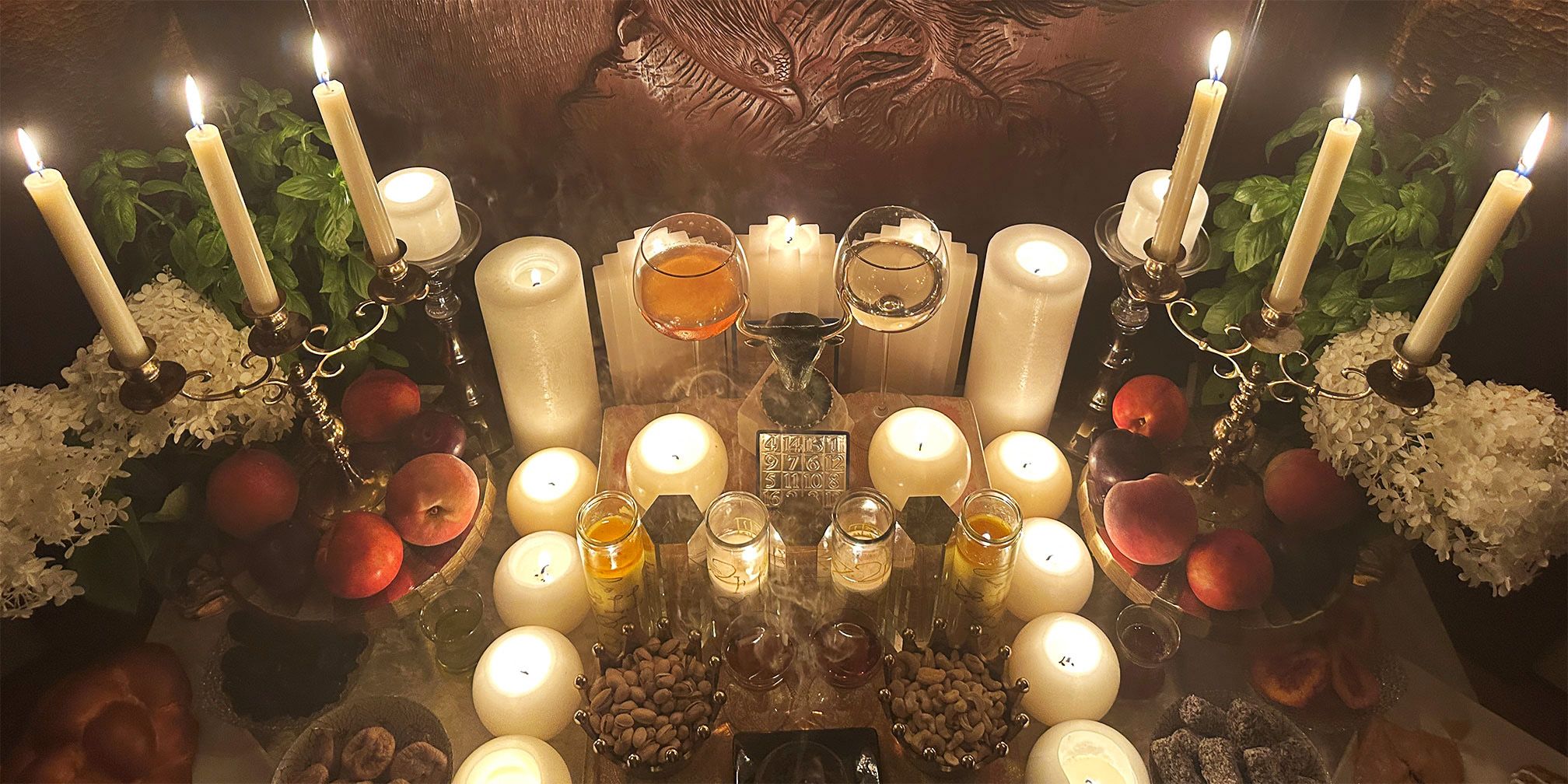
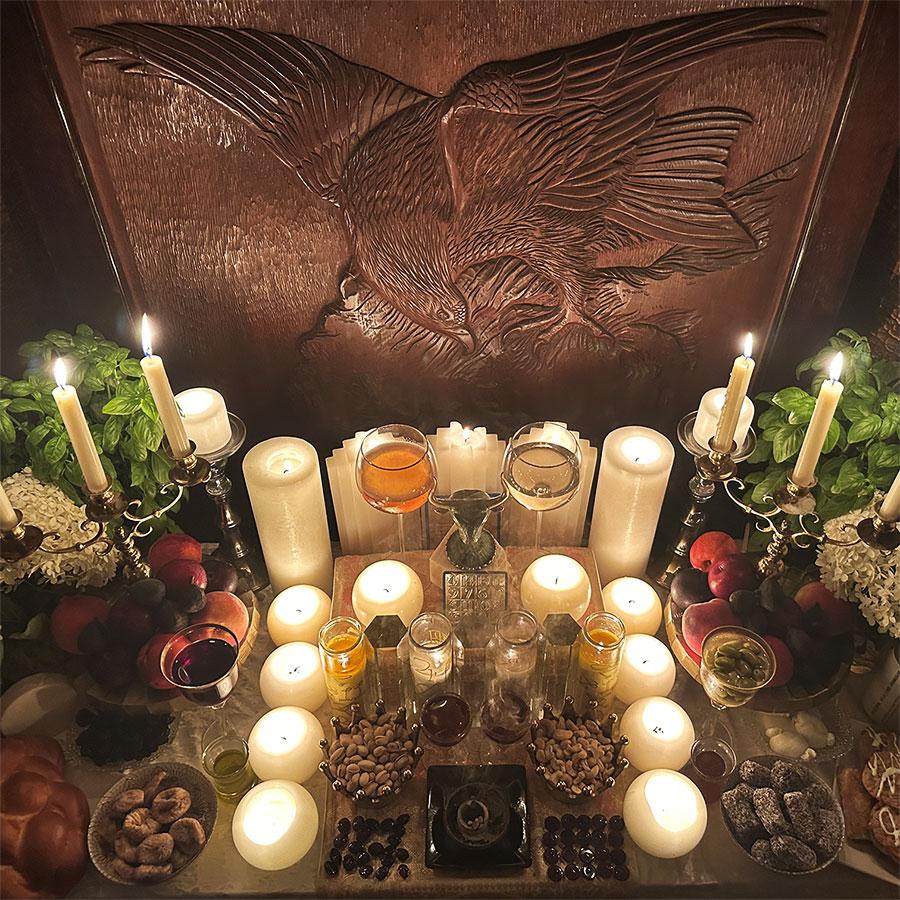
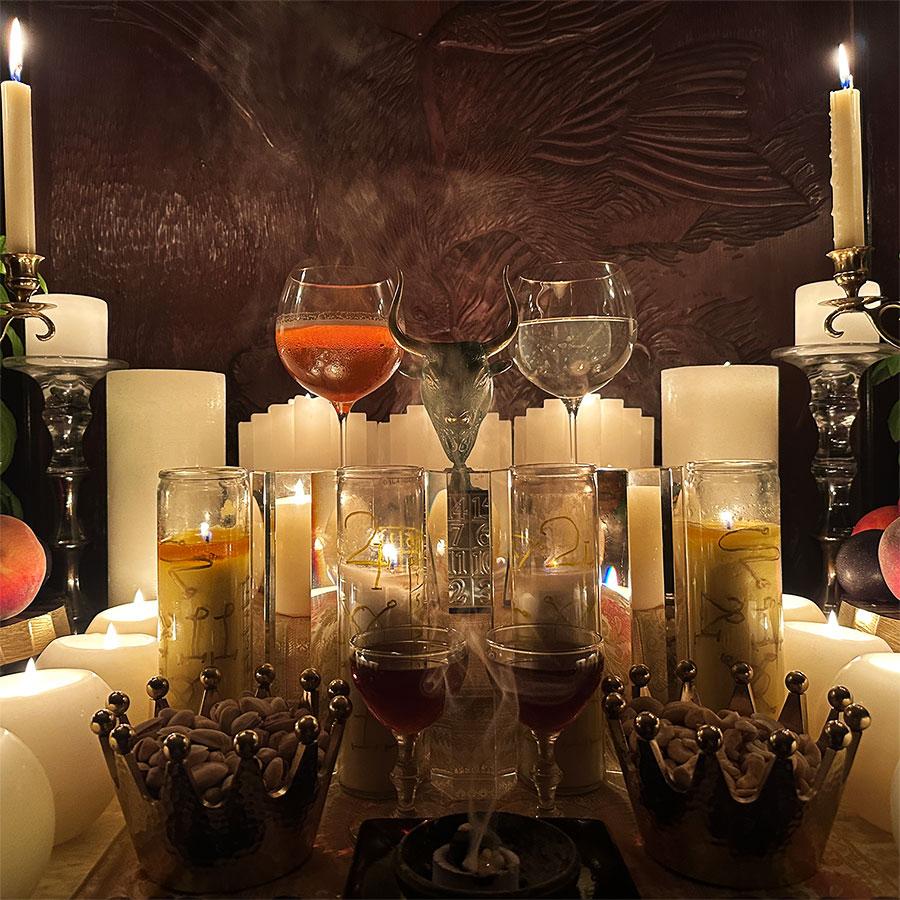
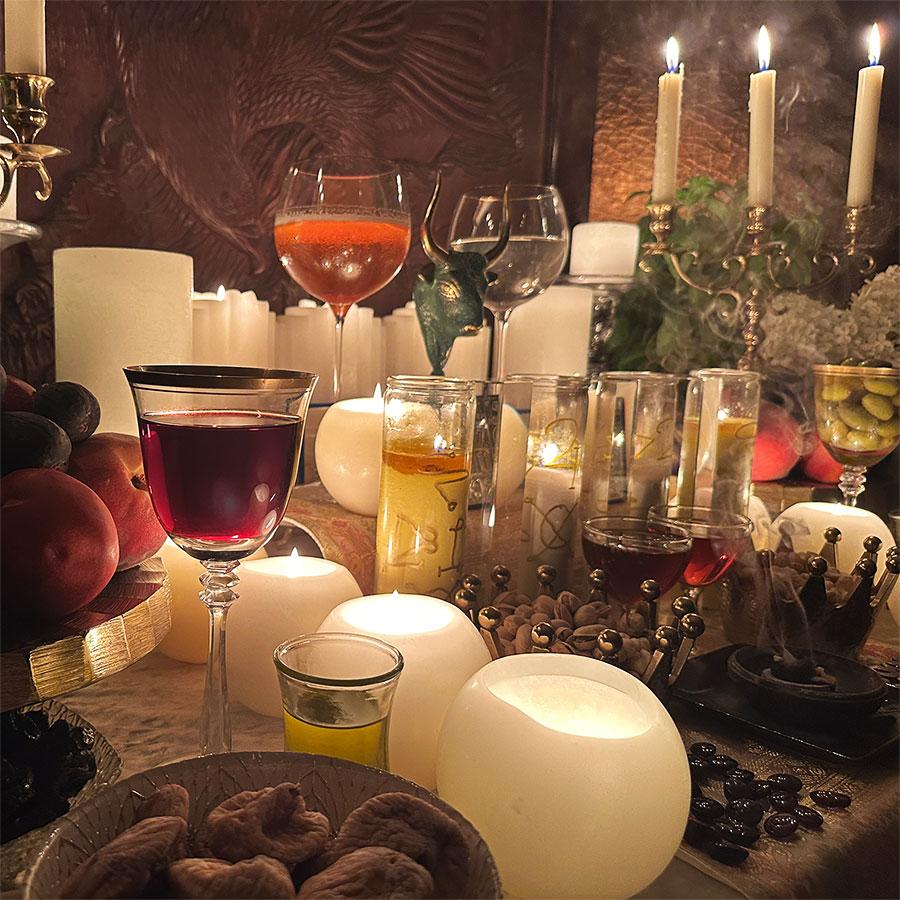
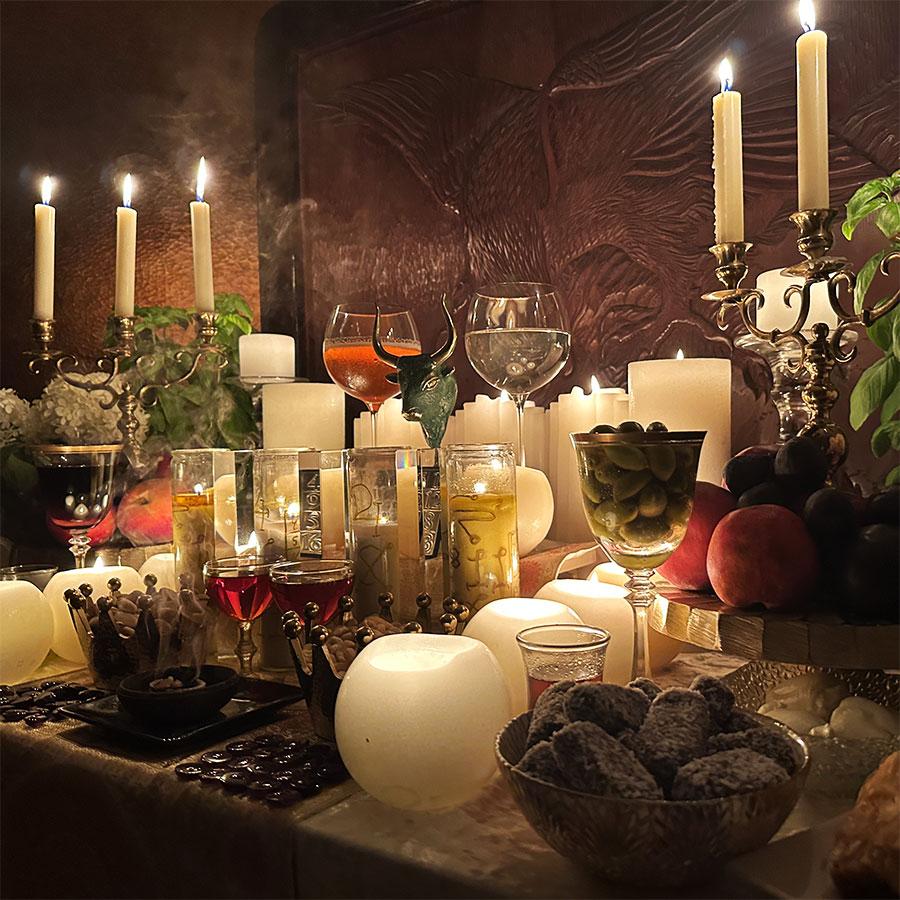
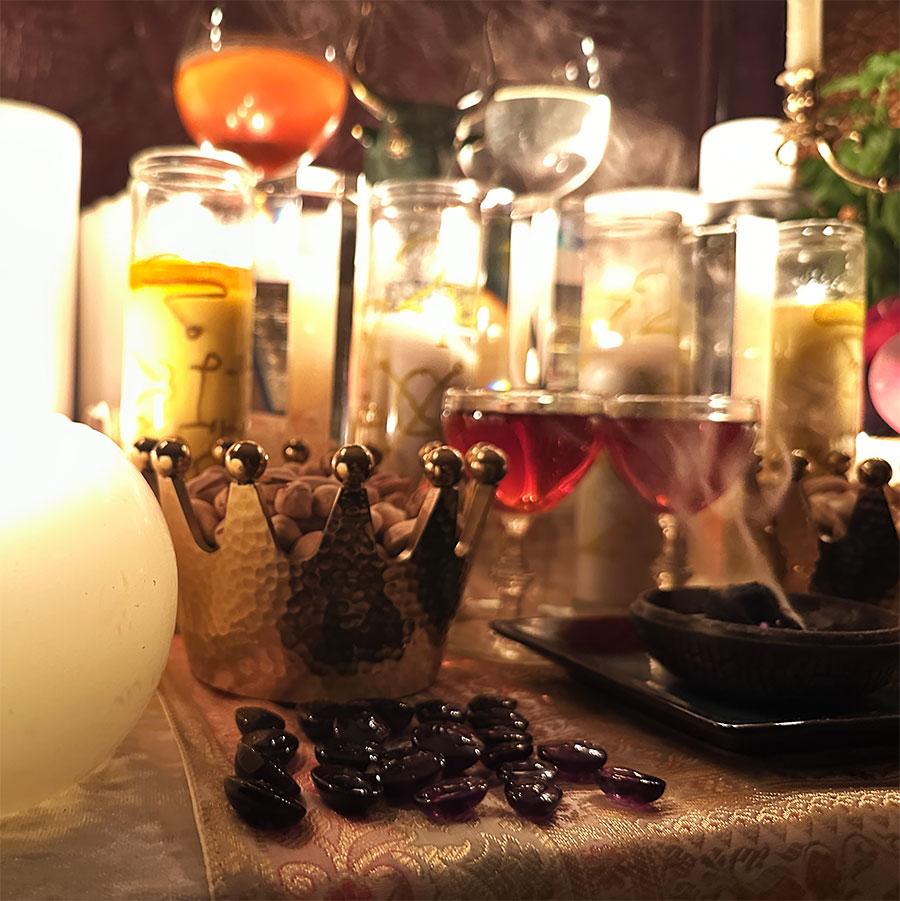
An altar of white and gold was established prior to the working, with our Jovial bronze bull statue featured as the centerpiece under an enormous carved wooden eagle screen that served as the backdrop for the working. Copious candles illuminated the altar, including four ritually consecrated to Jupiter emblazoned with his symbol and seal as well as the sigil and planetary square of his planetary intelligence. Two live basil plants as well as bunches of fresh-cut hydrangeas from our yard served as plant offerings. Generous food offerings including lots of fresh fruit, two golden crowns filled with pistachios and cashews, dried figs and dates, fresh bread, and more were made to Jupiter, with glasses of wine, honey, olive oil, and spirits rounding out the offerings.
At the outset of the working, jovial incense (described below) was offered with invocations of Jupiter by many names and epithets, his planetary angels, and the rūḥāniyyat (spiritual beings, akin to daimones, held by some to be angels) of Jupiter’s sphere. A bespoke petition expressing and requesting the purposes of degree of exaltation Jupiter talismans as described in the Treasure of Alexander was made prior to the carving of the stones, affixation of herbs, and suffumigation, all of which took place within the stated electional window according to our guarantees. Upon completion of the operation, the ritual was formally closed with gratitude and license to depart given to the spirits of Jupiter.
Suffumigation
The suffumigation for the Degree of Exaltation talismans was produced according to a modified recipe that appears in Picatrix in the section on Jupiter in the chapter in celestial petitions: “Take common fleabane, frankincense, nettle tree, equal parts; three parts of myrrh, and two parts of clean raisins. Grind everything that needs to be ground, mix it together with wine that has been aged for many years, and make into pills that can be saved for use” (Book III, Chapter 7).
It should be stated up front that the ingredients for the Picatrix suffumigations in the English-speaking world remains something of a conundrum. The translation available to us derives from Pingree’s critical edition of the Latin Picatrix which has ‘Celtice,’ translated by Greer & Warnock as ‘nettle tree’ and by Attrell & Porreca as ‘hackberry.’ Unfortunately, hackberry (the nettle tree) was only assigned the genus ‘Celtis’ in the 18th century by Linnaeus, and so it is unlikely that this was the plant intended when the Ghayat al-Hakim was translated into Latin in the court of King Alfonso X in medieval Spain. Any attempt at pinning down this ingredient, let alone the entire recipe, with precision is further exacerbated by the fact that Ritter & Plessner’s German translation of the Arabic Ghayat contains both a different number of ingredients and several that differ wildly from those in the English translation of the Latin Picatrix. We look forward to Dr. Liana Saif’s forthcoming translation of the Arabic Ghayat. For now, we make do with the resources we have available.
For our version of this Jupiter suffumigation we used wild harvested fleabane, royal green Hojari fankincense, high quality Yemini myrrh, and golden raisins as well as a 2018 vintage wine (aged 7 years). Instead of hackberry/nettle tree, we followed some historical clues to infer that the lotus tree aka the lote tree was a likely candidate for the plant referred to as ‘Celtice.’ As the Zizyphus lotus is difficult to source, we used the more available fruit of a very similar plant of the same genus, the Zizyphus jujuba, as a substitute. The lotus tree and/or its fruit appear in the Quran, the Odyssey, and the mythology of the founding of Rome. The fruit was considered a luxury food item in antiquity and is a valuable ingredient in Traditional Chinese Medicine with many healing and moderating properties; these factors increase our sense that at the very least, a celestial correspondence between Jupiter and this plant is likely and thus its inclusion in the suffumigation is reasonable.